
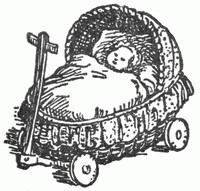
Woher die Kindlein kommen by Hans Hoppeler
Published in 1909, 'Woher die Kindlein kommen' is a children's book that tries to tackle the big question in its title. It follows a curious young boy, Fritz, who keeps asking his father where babies come from. His poor dad, clearly flustered, spins an elaborate tale involving a kind stork who gets help from flower fairies and hardworking bees to find babies in magical gardens and deliver them to waiting parents.
The Story
The plot is simple: Fritz asks, and his father tells a long, whimsical story to avoid giving a direct answer. We follow the stork's journey across seasons, his consultations with nature's helpers, and the final, gentle delivery of a baby to a happy home. The story ends with Fritz satisfied, his curiosity about mechanics completely sidestepped by fantasy. The real tension is invisible—it's the author's clear struggle to balance a child's innocence with their natural curiosity.
Why You Should Read It
Reading this today is a wild experience. You won't learn anything about human biology, but you'll learn a ton about the social attitudes of the early 20th century. The author's creative, desperate attempts to explain life's beginnings without mentioning bodies or sex is both ingenious and painfully awkward. It's a powerful reminder of how much has changed in how we communicate with children. The book itself becomes a character—a well-meaning, nervous parent trying its best.
Final Verdict
This isn't a book for someone seeking a good story. It's a historical artifact, perfect for anyone interested in social history, the evolution of parenting, or vintage children's literature. If you enjoy seeing how past generations grappled with topics we discuss openly today, you'll find this short book utterly captivating. Just don't give it to a kid who actually wants answers!
Legal analysis indicates this work is in the public domain. Preserving history for future generations.
Robert Miller
1 year agoI came across this while browsing and the clarity of the writing makes this accessible. I learned so much from this.
Sandra Smith
8 months agoFrom the very first page, the atmosphere created is totally immersive. Exactly what I needed.
Mary Allen
1 year agoThis is one of those stories where the author's voice is distinct and makes complex topics easy to digest. I learned so much from this.
Charles Jackson
1 year agoFive stars!


Logan Miller
6 months agoI came across this while browsing and the character development leaves a lasting impact. Highly recommended.