
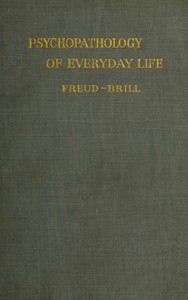
Psychopathology of Everyday Life by Sigmund Freud
This isn't a novel with a plot, but it presents a fascinating argument. Freud collects hundreds of real-life examples—forgotten names, slips of the tongue, lost objects, and simple errors. He then walks us through his process of unpacking each one. His core idea is that these aren't accidents. Instead, they are meaningful acts where a repressed thought or feeling pushes its way to the surface, interrupting our conscious intention. The 'story' is the journey of seeing the mundane chaos of daily life through this new, startling lens.
Why You Should Read It
It’s incredibly engaging because it turns you into a detective of your own mind. Reading it, you’ll start catching your own slips and wondering, 'Wait, why did I just say that?' It demystifies Freud a bit, showing how he built his theories from observing normal people, not just patients. You don't have to agree with every one of his conclusions to be fascinated by the exercise. It makes you pay attention to the quiet, messy undercurrent of your own thoughts.
Final Verdict
Perfect for curious minds who enjoy psychology, self-reflection, or just a really compelling 'what if' idea. It’s also great for anyone who wants to understand where a lot of our modern talk about the unconscious comes from. It's more accessible than some of Freud's denser clinical work. Give it a read if you're ready to have your daily fumbles and forgetfulness look a whole lot more interesting.
This content is free to share and distribute. It serves as a testament to our shared literary heritage.
Ethan Lewis
1 year agoEssential reading for students of this field.
Nancy Ramirez
2 years agoAs someone who reads a lot, the clarity of the writing makes this accessible. I learned so much from this.
Patricia Smith
11 months agoWithout a doubt, the depth of research presented here is truly commendable. Highly recommended.
Elizabeth Gonzalez
1 year agoThis is one of those stories where the narrative structure is incredibly compelling. A valuable addition to my collection.







Kimberly King
1 year agoI was skeptical at first, but it creates a vivid world that you simply do not want to leave. I will read more from this author.