
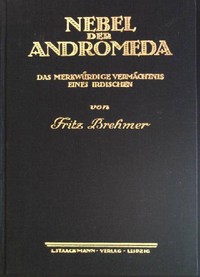
Nebel der Andromeda by Fritz Brehmer
Fritz Brehmer's Nebel der Andromeda (The Andromeda Nebula) is a fascinating piece of early German science fiction. Published in 1920, it reads like a time capsule from a different era of imagination, where the mysteries of the cosmos felt both terrifying and deeply personal.
The Story
The plot follows Professor Waller, a respected physicist whose world is shaken when he gets a final, cryptic letter from his friend and fellow scientist, Dr. Ambrosius. Ambrosius died under strange circumstances, and his letter warns of a catastrophic discovery linked to the Andromeda Nebula. Driven by grief and obsession, Waller picks up the trail of his friend's research. What he uncovers isn't just a new star or planet, but a fundamental flaw or 'fog' in the fabric of space itself—a discovery that could unravel everything.
Why You Should Read It
Don't come looking for laser battles or alien invasions. The real tension here is intellectual and existential. Brehmer builds a fantastic mood of creeping dread. You feel Waller's isolation as he chases a truth that pushes him to the edge of sanity. The book is really about the human cost of discovery. What happens when you stare too long into the void, and it starts staring back? The science is dated, but that almost adds to the charm—it's a window into how people a century ago grappled with the vast, unknown universe.
Final Verdict
This is a niche but rewarding read. It's perfect for history buffs curious about the roots of sci-fi, or for readers who love a slow-burn, atmospheric thriller. If you enjoy the eerie, cosmic horror of H.P. Lovecraft but prefer a more scientific (for its time) approach, you'll find a kindred spirit in Brehmer. Just be ready for a story that prioritizes big ideas and haunting questions over fast-paced action.
This historical work is free of copyright protections. You do not need permission to reproduce this work.
Paul Ramirez
6 months agoHaving read this twice, the flow of the text seems very fluid. Highly recommended.
Barbara Allen
10 months agoThis book was worth my time since the narrative structure is incredibly compelling. Exceeded all my expectations.
Mark Taylor
1 year agoFive stars!
Charles Gonzalez
1 year agoAs someone who reads a lot, the depth of research presented here is truly commendable. I couldn't put it down.




Mary Moore
1 year agoHonestly, the storytelling feels authentic and emotionally grounded. I would gladly recommend this title.