
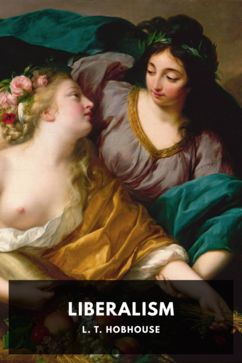
Liberalism - L. T. Hobhouse
Before we dive in, let's clear something up: this isn't a book about Democrats or Republicans. Published in 1911, L.T. Hobhouse's Liberalism is a journey back to the philosophical roots of the idea itself. Hobhouse acts as a guide, examining the history of liberal thought from thinkers like John Locke and John Stuart Mill, showing how the concept of individual liberty evolved.
The Story
There isn't a plot in the traditional sense. Instead, Hobhouse builds an argument. He starts by praising the old, classical liberalism for breaking the chains of absolute monarchy and establishing rights like free speech and private property. But then, he points out its major flaw. That old system, he says, led to brutal industrial conditions and crippling poverty for the working class. Hobhouse's big idea is that you can't be truly free if you're starving, uneducated, or powerless. So, he proposes a new vision: a 'social' liberalism. In this version, freedom isn't just about being left alone; it's about having the real opportunity to thrive. This means the state has a positive role to play—not to control people, but to ensure everyone has access to things like education, fair wages, and healthcare, which are the foundations of a meaningful life.
Why You Should Read It
I picked this up expecting a dry history lesson. What I got was a mind-bending framework for today's political debates. Reading Hobhouse feels like getting the source code for arguments about welfare, taxation, and social justice that are still happening. His writing is clear and forceful. He makes you question easy assumptions: Is a law setting a minimum wage a restriction on freedom, or is it a tool to create freedom for workers? His answer, backed by sharp reasoning, is usually the latter. It gave me the vocabulary to understand the philosophical middle ground between unchecked capitalism and authoritarian socialism.
Final Verdict
This book is perfect for anyone feeling politically curious or confused. If you're a student trying to make sense of political theory, this is a foundational text written in surprisingly accessible prose. If you're just a regular reader who wants to understand where ideas like 'social democracy' or 'the welfare state' came from, Hobhouse is your man. It's not a beach read—you'll need to go slow and think—but it's one of the most clarifying and relevant old books I've ever encountered. It shows that the fight for a good society is an old one, and the best ideas have deep roots.
This masterpiece is free from copyright limitations. You do not need permission to reproduce this work.
Kimberly Gonzalez
2 months agoNot bad at all.
Patricia Martinez
5 months agoI stumbled upon this title and the storytelling feels authentic and emotionally grounded. One of the best books I've read this year.
Patricia Taylor
6 months agoFast paced, good book.



Richard Walker
2 months agoThe index links actually work, which is rare!