
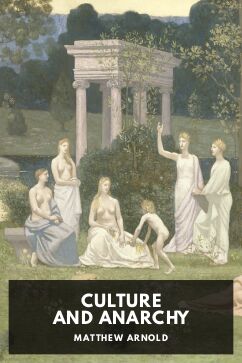
Culture and Anarchy - Matthew Arnold
Published in 1869, Culture and Anarchy isn't a novel with a plot, but it has a powerful central argument. Matthew Arnold, a poet and critic, looks at the England of his day and gets worried. He sees a nation divided. On one side, he argues, are people chasing after money, industrial progress, and strict moral codes (he calls this class 'Philistines'). On another are the old aristocracy, focused on tradition and style ('Barbarians'). And then there's the growing working class ('Populace'), simmering with discontent.
The Story
There's no story in the traditional sense. Instead, Arnold builds a case. He watches the political fights and social unrest of his time and calls it 'anarchy'—not chaos in the streets, but a deeper chaos of ideas. Everyone is fighting for their own narrow interest, he says, whether it's profit, liberty, or doing what they want. He proposes culture as the antidote. For Arnold, culture means 'the best which has been thought and said.' It's the lifelong project of learning, reflecting, and striving for perfection. He believes if society collectively pursued this ideal of 'sweetness and light' (beauty and intelligence), we could move past our tribal squabbles and build something better.
Why You Should Read It
You should read it because it holds up a mirror. When Arnold complains about people valuing machines and wealth over beauty and knowledge, or about public debate becoming shrill and reactionary, it's impossible not to see parallels to our own time. His solution—a gentle, persistent push toward education and refinement—might seem too simple, or even elitist to modern ears. But that's what makes the book so engaging. It forces you to argue with him. Do we need a common standard of 'the best' to hold society together? Or is that idea itself part of the problem? Reading Arnold is like having a deep, slightly one-sided conversation with a very smart, very concerned Victorian uncle.
Final Verdict
This book is perfect for anyone who loves big ideas and doesn't mind a 19th-century writing style. It's for the person who gets frustrated with today's culture wars and wants to understand their deeper roots. It's not a quick or easy read, but it's a profoundly thoughtful one. If you've ever wondered if social media arguments, political polarization, and our focus on utility over art are new problems, Matthew Arnold will show you they're ancient history. He offers a diagnosis, if not a perfect cure, for the modern age.
No rights are reserved for this publication. Enjoy reading and sharing without restrictions.
Jessica Martin
11 months agoNot bad at all.
Sandra Nguyen
1 year agoTo be perfectly clear, the author's voice is distinct and makes complex topics easy to digest. This story will stay with me.
Joseph Nguyen
1 year agoRead this on my tablet, looks great.
Carol Johnson
2 years agoIf you enjoy this genre, it challenges the reader's perspective in an intellectual way. I learned so much from this.






Christopher Walker
1 year agoText is crisp, making it easy to focus.